
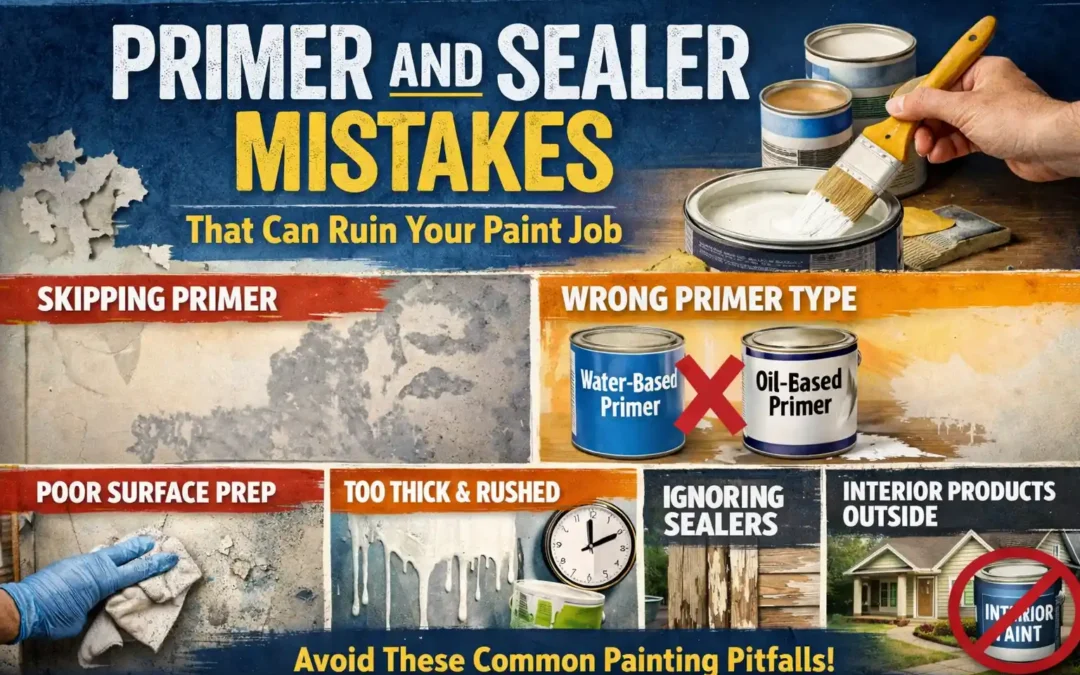
A flawless paint job starts long before the first coat of color goes on. Primer and sealer play a critical role in how well your paint adheres, how long it lasts, and how good it looks. Unfortunately, many homeowners and DIY enthusiasts overlook proper priming and sealing techniques, leading to peeling paint, uneven coverage, and costly do-overs. Understanding the most common primer and sealer mistakes can help you achieve professional-quality results the first time.
Skipping Primer Altogether
One of the biggest mistakes is skipping primer entirely. While some paints claim to include primer, they often don’t provide the same level of adhesion or stain-blocking power as a dedicated product. Surfaces like new drywall, raw wood, or stained areas need primer to create a uniform base. Without it, paint can absorb unevenly, resulting in blotchy finishes and extra coats.
Using the Wrong Type of Primer
Not all primers are designed for every surface. Choosing the wrong one can lead to poor adhesion and visible imperfections. Water-based primers may struggle to block heavy stains, while oil-based options are better suited for smoke or water damage. Slick surfaces like metal or glossy cabinets require bonding primers specifically made to stick where others won’t.
Poor Surface Preparation
Even the best primer won’t perform well on a dirty or damaged surface. Failing to clean away dust, grease, or old peeling paint prevents proper adhesion. Light sanding and repairing cracks or holes ensures the primer bonds effectively and creates a smooth, even foundation.
Applying Primer Too Thin or Unevenly
Trying to stretch primer to save money often backfires. Thin or uneven application leads to inconsistent coverage and affects how the paint looks once applied. Primer should be spread evenly across the surface to fully seal and prepare it for the topcoat.
Applying Too Much Primer or Rushing Dry Time
Applying thick coats of primer can cause drips and extend drying times, which interferes with proper bonding. Rushing to paint before the primer has fully dried can trap moisture and lead to peeling or bubbling later. Always follow recommended drying times for the best results.
Ignoring the Need for Sealers
Sealers are essential for protecting porous materials like wood, brick, and concrete, especially on exterior projects. Without a proper sealer, moisture can seep in and cause paint to crack, peel, or fade prematurely. Sealers act as a barrier that preserves both the surface and the paint.
Misusing Sealers
Applying sealers under the wrong conditions can create serious issues. Using them on damp surfaces or in poor weather can trap moisture, leading to bubbling and long-term damage. Proper timing and environmental conditions are key to ensuring sealers perform as intended.
Not Tinting Primer When Needed
Tinting primer to a shade similar to your final paint color can significantly improve coverage. This step is often overlooked, but it helps reduce the number of paint coats required, especially when making drastic color changes.
Using Interior Products for Exterior Projects
Interior primers and sealers are not built to withstand outdoor conditions. Using them on exterior surfaces can result in early failure due to sun exposure, moisture, and temperature changes. Always choose products specifically formulated for the environment you’re working in.
Final Thoughts
Avoiding these common primer and sealer mistakes can make all the difference in your paint job. By selecting the right products, preparing surfaces thoroughly, and applying everything correctly, you’ll achieve a smooth, long-lasting finish that looks great and stands the test of time.